 Ferndale Roofing
 Composite Decking for Marietta: Built for the Water-Adjacent Side of Ferndale
Marietta sits in the low-lying, waterfront pocket of the Ferndale area, close enough to the water that homes here take on a steadier dose of salt-laden air than lots further inland in Whatcom County. Add in driving rain that comes off the water sideways rather than straight down, and a moss season that can run most of the year on shaded, low ground, and you get a set of conditions that's harder on an outdoor deck than most manufacturers' spec sheets account for. A deck that performs fine in a dry showroom, or even on a sunnier lot a few miles inland, can still struggle in Marietta if it wasn't built with this specific exposure in mind.
This page is about one job in one place: composite decking, built correctly, for Marietta homes. Not a generic decking overview, and not advice written for a drier part of the state. What follows is what we've learned building and repairing decks in this particular stretch of the Ferndale area.
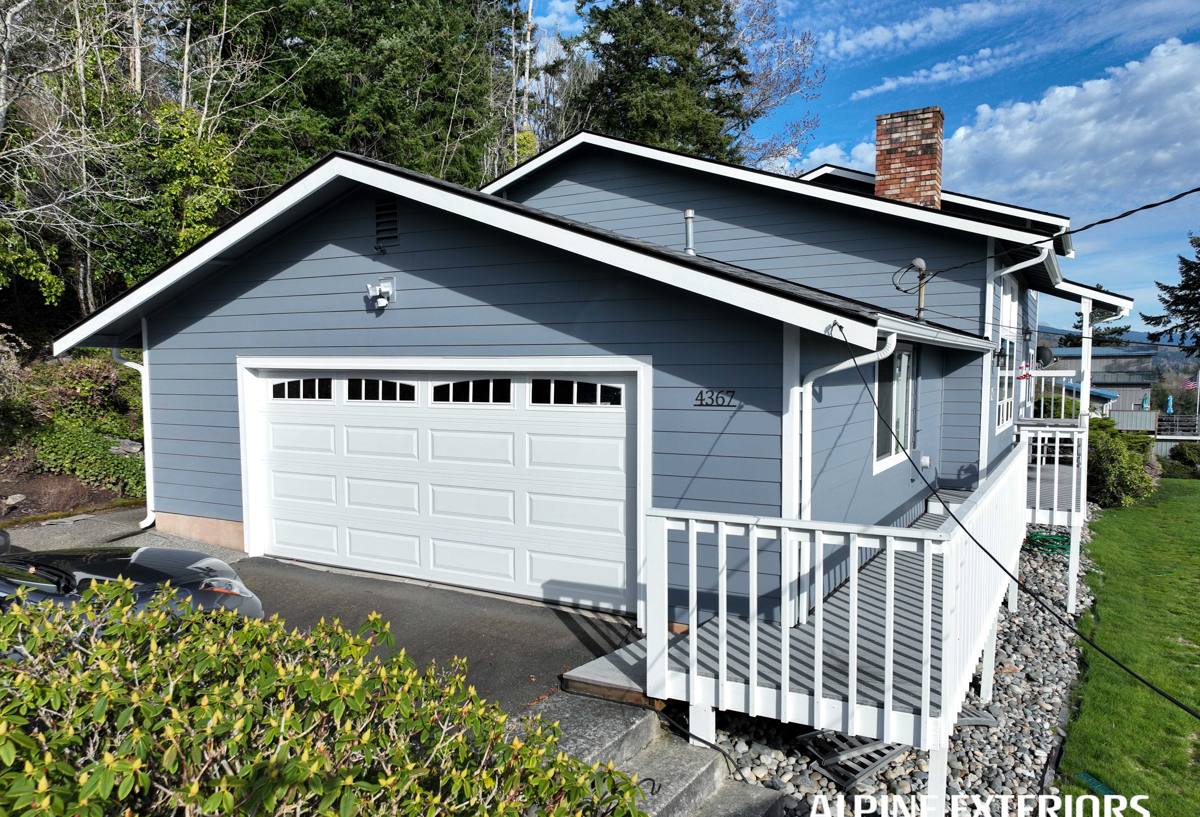
What Marietta's Exposure Does to a Deck
Salt Air and Corroding Hardware
A deck has no wall or roofline to shield it, so it takes the full brunt of whatever the air is carrying. In Marietta's waterfront setting, that means a steady presence of salt that accelerates corrosion in anything metal — deck screws, joist hangers, post bases, railing brackets. Standard hardware can start showing rust streaks and weakened holding strength years before the decking material itself shows any wear, which is why fastener grade matters as much as board selection on a job here.
Rain That Doesn't Fall Straight Down
Storms moving through this part of Whatcom County regularly bring wind-driven rain, and a low, water-adjacent lot in Marietta gets less natural wind-break than a more sheltered inland property. That sideways rain works its way under railings, into ledger connections, and between deck boards that weren't gapped with drainage in mind. The issue isn't the deck surface getting wet — composite handles that. It's water getting trapped underneath or against the framing and not drying out between storms.
A Long Moss Season on Low, Shaded Ground
Low-lying ground holds moisture longer than higher, better-drained lots, and combined with mild temperatures and plenty of shade, that gives moss and algae an extended growing season on horizontal deck surfaces. It typically shows first on north-facing decks and areas shaded by the house or nearby trees. Composite resists this better than wood, but the amount of resistance varies a lot by product line, board texture, and how the substructure underneath is ventilated.
Composite vs. Wood Decking for This Lot Type
Homeowners in Marietta often ask us for a straight comparison rather than a sales pitch toward the pricier option. Here's how the two materials actually hold up given this specific exposure:
| Factor | Wood Decking | Composite Decking |
|---|---|---|
| Salt air and fastener corrosion | Same risk unless coastal-grade hardware is used | Same risk unless coastal-grade hardware is used |
| Moisture absorption | Absorbs and swells, worst at cut ends and fastener holes | Minimal on capped boards; cut ends still need sealing |
| Moss and algae resistance | Low without regular cleaning and sealing | Higher, especially with a capped, textured board |
| Annual maintenance | Staining or sealing on a regular cycle | Periodic washing; no staining required |
| Upfront material cost | Lower | Higher |
| Cost over 15-plus years | Higher once maintenance and repair are factored in | Lower if the substructure and fastening were done right |
On a low, water-adjacent lot like most of Marietta, that maintenance gap tends to show up faster than it would on a drier, higher property, which is a big part of why composite is the material most homeowners here land on once they see the comparison laid out plainly.
What a Correct Composite Deck Build Involves
Substructure Sized for a Low, Wet Lot
The composite boards get the attention, but the framing underneath is what determines how long the deck actually lasts. On lower ground with limited natural drainage, joists need enough clearance to let air move underneath, footings need to be set with the actual water table and grading in mind, and any framing lumber not fully clear of the ground needs to be rated and protected accordingly. A deck built on a generic framing plan without accounting for a specific lot's drainage is one of the more common reasons we get called out to fix a deck built by someone else.
Fastening and Board Gapping
Composite boards expand and contract with temperature, and they need gapping that lets standing water actually drain rather than pool between boards. Hidden fastener clip systems, installed at the correct spacing, keep the walking surface clean and reduce the amount of exposed metal sitting out in salt air. Get the spacing wrong and you end up with cupping, squeaking, or trapped moisture — problems that usually show up a season or two after installation, not on day one.
Ledger Flashing Where the Deck Meets the House
The ledger board connection is the single most common place we find hidden water damage on decks we're asked to repair or replace. Correct flashing goes under the house's existing weather barrier, not caulked over the top of it, so wind-driven rain can't track behind the siding and into the wall framing. It's a detail that disappears once the deck is finished, which is exactly why it's worth asking about directly before work starts.
Railings and Stairs
Any elevated deck needs guardrails and stair railings built to code-required height and baluster spacing, and in this climate those railing connections deserve the same corrosion-resistant hardware as the decking fasteners. Stair treads also benefit from a textured, slip-resistant composite surface, since stairs on a shaded, low-lying lot tend to stay damp longer than the main deck surface.
Permits and Planning for a Marietta Deck
Most new decks above a certain height, and many full replacements, require a permit through the applicable local jurisdiction, along with attention to property setbacks and, depending on the lot, any shoreline or critical-area considerations that can apply to water-adjacent property in this part of the county. Exact requirements depend on the specific lot and project scope, so we don't guess at them — we confirm what applies to your property and handle the permitting process as part of the job rather than leaving it for you to sort out separately.
Our Process for a Marietta Composite Deck
- Site visit. We look at grading and drainage, sun and wind exposure, how close the lot sits to the water, and the condition of any existing deck if this is a replacement.
- Material walkthrough. We go over composite board options, colors, and fastener grades suited to this specific exposure rather than a one-size-fits-all recommendation.
- Permitting. We confirm what's required for the property and handle the paperwork before framing starts.
- Substructure and framing. Footings, joists, and any structural repair happen first, sized for the actual drainage and load conditions on site.
- Flashing and moisture protection. Ledger flashing, joist tape, and drainage detailing go in before a single composite board is installed.
- Decking, railings, and stairs. Boards go down with correct spacing and hidden fasteners, followed by railing and stair work built to code.
- Final walkthrough. We cover what your specific board line does and doesn't need going forward, in plain terms.
Choosing the Right Composite Board for This Exposure
- Capped composite over uncapped: A full poly-cap shell resists moisture absorption, staining, and fading far better than uncapped composite, which matters more on a lot with this much sustained moisture exposure.
- Board color: Darker boards run hotter and can show UV fade faster under sustained sun; lighter and mid-tone colors tend to hold up more evenly here, though color is ultimately your call.
- Surface texture: A textured, slip-resistant finish matters more on a deck that stays damp through long stretches of the year, particularly on stairs and shaded sections.
- Warranty terms: Composite warranties vary by manufacturer in what's actually covered — staining, fading, structural integrity — and for how long. Worth reading the real terms rather than assuming all composite warranties are equivalent.
We'll go through specific product lines once we've seen your lot, rather than recommending the same board regardless of exposure or budget.
Maintenance Checklist for a Marietta Composite Deck
Composite cuts maintenance down significantly compared to wood, but it isn't zero-maintenance, especially this close to the water. A simple seasonal routine covers most of it:
- Rinse the deck surface periodically to clear salt residue and organic debris before it works into the board or cap layer
- Keep gaps between boards clear of leaves and debris so water and airflow can move the way the fastener system was designed for
- Check railing hardware and any exposed fasteners once a year for early rust, especially heading into the wet season
- Clear moss promptly on shaded sections with a soft-bristle brush and a manufacturer-approved cleaner rather than an aggressive pressure washer setting
- Confirm gutters and downspouts near the deck direct water away from the deck surface and substructure rather than onto them
- Check underneath the deck once a year if it's accessible, looking for standing water or soft framing before it becomes a structural issue
Why a Crew That Already Works Marietta Makes a Difference
A crew that mostly builds decks on higher, drier, more sheltered lots elsewhere in Whatcom County can still do competent work, but Marietta's low ground and closer water exposure bring up questions that don't come up as often on those other jobs — drainage and grading around footings, corrosion-grade fastener requirements, and how long moss pressure actually runs on shaded, low-lying decks in this specific spot. Working this area regularly means those aren't judgment calls we're making for the first time on your project. We've seen which details hold up here and which ones are the first to fail, and we build accordingly rather than applying the same generic spec to every lot in the county.
If you're planning a new composite deck or replacing an aging one in Marietta, we're glad to walk the site with you and lay out the options honestly. Reach out using the form below for a free, no-pressure estimate.