 Ferndale Roofing
 Deck Replacement Built for Lynden's Weather, Not Just Its Look
A deck in Lynden works harder than it looks like it should. Whatcom County's long wet season, the driving rain that comes sideways off a winter storm, and the moss that creeps in every shaded corner from fall through spring don't care how new the boards look on top. They go after the framing, the fasteners, and the ledger connection first — the parts you can't see from the yard. By the time a deck looks bad, the structure underneath has usually been losing ground for years.
We're Ferndale Roofing Co, and while roofing is our name, deck replacement is built on the same skill set: reading how water moves across a structure, flashing it correctly where it meets the house, and picking materials that hold up to this specific climate instead of a generic one. We work Lynden regularly, which matters more than most homeowners realize — the failure patterns here are consistent, and a crew that's seen them before doesn't have to learn on your deck.
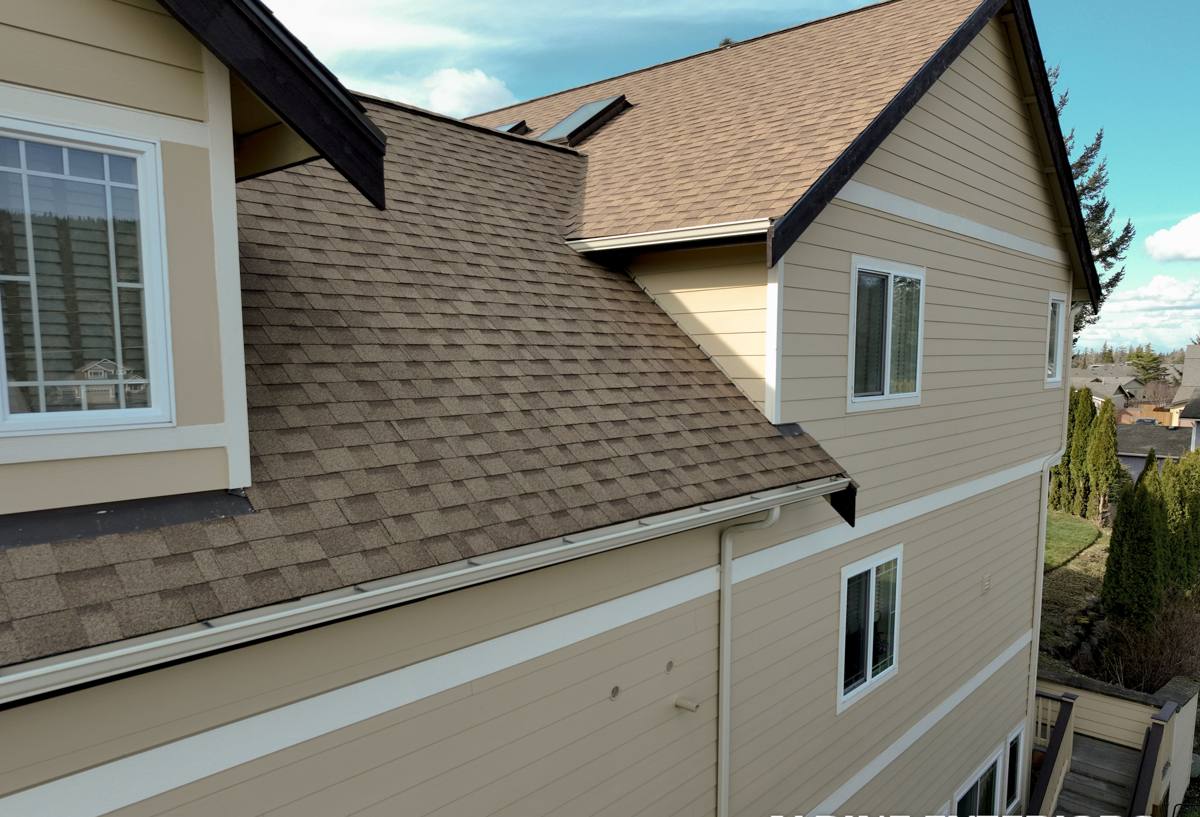
How This Climate Actually Damages a Deck
Driving rain finds the weak points
Wind-driven rain doesn't just fall on a deck, it gets pushed into joints, under flashing, and into any gap where two pieces of wood meet. On older or poorly built decks, that means water working its way into the ledger board connection at the house — the single most important structural joint on any deck, and the one most commonly built wrong. Once water gets behind that ledger, rot starts where you can't see it, right where the deck's entire weight transfers to the structure.
Moss season is longer here than most homeowners expect
Whatcom County's moss season isn't a few weeks — it's most of the year on any deck surface that doesn't get direct afternoon sun. Moss holds moisture against the wood surface constantly, which accelerates rot in untreated or under-treated lumber and turns composite and wood decking alike into a slip hazard. A deck tucked against the house or shaded by trees will grow moss faster than an open, sun-exposed one, and the growth pattern usually tells us exactly where drainage and airflow are failing.
Fasteners and hardware take the hidden hit
The broader marine-influenced air across this part of the county accelerates corrosion in fasteners, joist hangers, and post bases that aren't rated for it. A deck built with standard interior-grade hardware will show rust and metal fatigue years before the wood itself is a problem — and corroded hardware is a structural failure waiting to happen, not a cosmetic one.
Signs Your Lynden Deck Needs Replacement, Not Repair
Not every tired-looking deck needs a full rebuild, but some signs mean repair is just delaying the inevitable:
- Soft, spongy, or spring-loaded decking boards, especially near the house or in shaded areas
- Visible gaps, rust streaks, or movement at the ledger board where the deck meets the siding
- Wobble in the railing posts or stairs when you put weight on them
- Persistent moss or dark staining that comes back within weeks of cleaning
- Fasteners that are rusted, backing out, or already replaced more than once
- Footings that look cracked, heaved, or undersized for the deck's actual size and use
- A deck built more than 15-20 years ago to older code, especially around ledger attachment and guardrail spacing
If you're seeing two or more of these, a repair is usually just patching a symptom while the structural problem keeps working underneath. We'll tell you honestly which category your deck falls into during the estimate — we don't push a full replacement when a repair will genuinely hold.
What a Correct Deck Replacement Actually Involves
A deck replacement done right in this climate isn't just swapping old boards for new ones. The parts that determine whether it lasts are mostly invisible once the project is finished:
Ledger connection and flashing
The ledger board gets properly flashed and sealed where it meets the house, with a water-resistant barrier between the ledger and the siding so rain can't track behind it. This is the single detail most responsible for early deck failure when it's skipped or done poorly.
Footings and framing
Footings get sized and set to current code for the deck's actual load, not just matched to whatever was there before. Framing lumber is rated for ground contact or exposure as appropriate, and joist spacing is set for the decking material chosen, not a generic default.
Fasteners and hardware
Corrosion-resistant, code-rated hardware throughout — hangers, post bases, and fasteners matched to the treated lumber they're touching, since the wrong metal combination against treated wood accelerates corrosion instead of preventing it.
Drainage and airflow underneath
Grading and gapping are set up so water sheds away from the house and air can move underneath the deck. This is what actually slows moss and rot from coming back, more than any surface treatment.
Decking Material Options for Lynden Conditions
| Material | How It Handles Rain & Moss | Maintenance | Typical Lifespan |
|---|---|---|---|
| Pressure-treated wood | Good if properly sealed and re-sealed; moss gains a foothold faster without upkeep | Annual cleaning and re-sealing recommended | 15-20 years with maintenance |
| Cedar | Naturally rot-resistant but softer surface holds moisture in shaded spots | Regular staining/sealing to prevent graying and moss | 15-25 years with maintenance |
| Composite decking | Doesn't rot, but still needs cleaning where moss and algae build up on the surface | Occasional washing, no sealing or staining | 25-30+ years, manufacturer-dependent |
There's no single "right" answer for every Lynden home — it depends on how much shade the deck gets, how much upkeep you want to do, and budget. We'll walk through the honest trade-offs for your specific site rather than defaulting to whatever's easiest to install.
Cost Factors for a Lynden Deck Replacement
Every deck is different, but the same handful of factors drive most of the cost difference between projects:
| Factor | Why It Matters |
|---|---|
| Deck size and shape | More square footage and more cuts around curves or angles increase material and labor |
| Decking material chosen | Composite costs more upfront than pressure-treated wood but less in long-term maintenance |
| Height and stairs | Elevated decks with stairs and railings require more framing, footings, and code-compliant guardrail work |
| Condition of the substructure | If footings or framing need replacing along with the decking, that adds to scope |
| Ledger and flashing repair | Correcting a poorly flashed ledger connection at the house is worth the added labor to prevent repeat failure |
We give you a real number after seeing the deck in person — broad ballpark ranges without an on-site look usually miss what's actually going on underneath.
How We Handle a Deck Replacement in Lynden
- On-site assessment: We check the ledger connection, footings, framing, and drainage, not just the surface boards, and tell you plainly what's structural versus cosmetic.
- Written estimate: A clear scope covering materials, framing work, flashing, and hardware — no vague allowances.
- Demo and structural work first: Old decking and any compromised framing or footings come out before anything new goes in.
- Ledger flashing and framing rebuild: The parts that determine long-term performance in this climate get done correctly, not rushed to get to the visible finish work.
- Decking, railing, and stairs installed: To current code, with fasteners and hardware matched to the material and this region's conditions.
- Final walkthrough: We go over the finished deck with you and explain any maintenance that will keep it performing, including how to manage moss before it takes hold.
Simple maintenance checklist to extend a new deck's life here
- Clean debris out of gaps between boards each fall before wet weather sets in
- Rinse or gently brush off moss growth as soon as it appears, rather than letting it establish
- Check the ledger area and any visible flashing once a year for gaps or staining
- Keep gutters and downspouts near the deck clear so runoff isn't draining onto it
- Re-seal wood decking on the manufacturer's recommended schedule, not "when it looks dry"
Why a Crew That Already Works Lynden Makes a Difference
A deck replacement crew that only shows up in this area occasionally is guessing at how the local climate will treat their work. A crew that's already handled Lynden's rain patterns, moss growth, and the way corrosion behaves on hardware here doesn't have to guess — we build the ledger flashing, drainage, and material choices around what we've actually seen fail and what's actually held up. That local pattern recognition is the difference between a deck that needs attention again in five years and one that doesn't.
If your Lynden deck is showing soft spots, persistent moss, or you're just planning ahead before it becomes a safety issue, we're happy to take a look. Reach out for a free, no-pressure estimate using the form below, and we'll give you a straight assessment of what your deck actually needs.