 Ferndale Roofing
 Roofing on an Island in Salt Air
Lummi Island sits out in the marine air of Whatcom County, reachable only by a short ferry crossing, and that isolation shapes everything about how a roof ages there. Homes on the island take a steadier, harder dose of salt-laden wind, wind-driven rain, and shade-grown moss than most inland Ferndale properties. None of that is dramatic on its own — it's the accumulation over years that catches homeowners off guard when a roof that "looked fine last summer" turns out to be failing underneath.
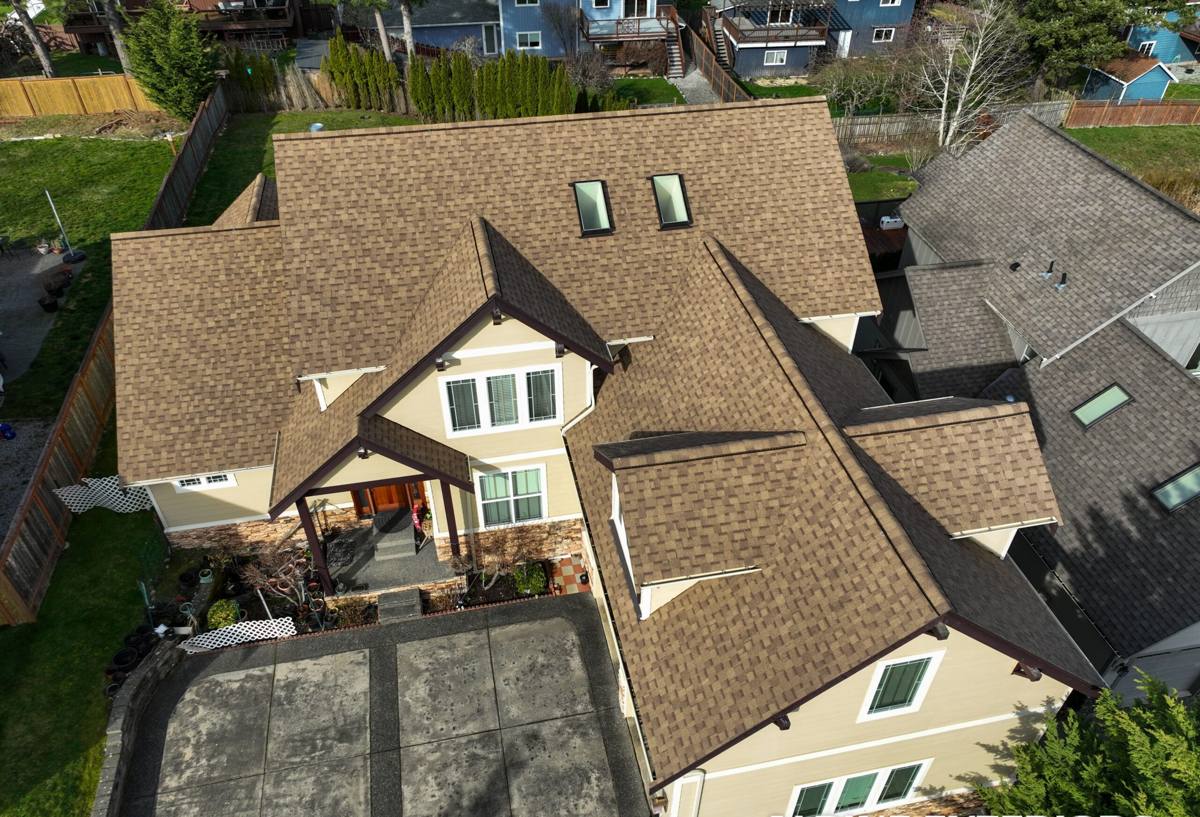
Roof replacement on Lummi Island isn't just a smaller version of a mainland job. The exposure is different, the moss pressure is different, and getting materials and a crew out to the island takes real planning. This page covers what that means for your roof, what a correct replacement actually involves, and how we approach the job.
Why Lummi Island Roofs Wear Differently
Salt Air and Metal Fatigue
Airborne salt accelerates corrosion on any exposed metal — flashing, fasteners, vent caps, gutter hardware. On a mainland roof a few miles inland, standard galvanized fasteners might hold up fine for decades. On Lummi Island, that same hardware can start showing rust streaks and pitting years earlier. It's one of the most common things we find when we get up on an older island roof: the shingles or panels themselves are still serviceable, but the metal components around them are failing first.
Driving Rain and Wind Direction
Island homes tend to catch wind and rain from more directions than a sheltered inland lot. Driving rain doesn't just fall — it gets pushed sideways and upward under laps and around penetrations that would stay dry in calmer conditions. That means flashing detail and underlayment quality matter more here, not less. A roof that's marginal on flashing work might leak on Lummi Island years before an identical roof would leak somewhere more sheltered.
Moss, Shade, and Moisture Retention
Much of Whatcom County deals with a long moss season, and tree-shaded, moisture-retaining island lots often have it worse. Moss holds water against the roof surface, works its way under shingle edges, and lifts material over time. On north-facing slopes and shaded roof sections, moss can become a near year-round maintenance issue rather than a seasonal one.
Signs a Lummi Island Roof Needs Replacement, Not Repair
Not every problem roof needs full replacement — but on the island, we see a few patterns that usually mean repair is just delaying the inevitable:
- Granule loss heavy enough that you can see bare, shiny patches on multiple slopes
- Rust staining or visible corrosion at flashing, valleys, or fastener heads across the roof, not just one spot
- Moss growth that returns within a season or two of cleaning, especially on shaded slopes
- Soft spots, sagging, or spongy decking felt underfoot during inspection
- Leaks that show up in more than one location, or that move around after rain from different directions
- Roof age past the manufacturer's expected service life, combined with any of the above
If a roof only shows one isolated issue — a cracked boot, a lifted shingle after a windstorm — targeted repair is usually the right call. Replacement makes sense once the underlying materials are failing broadly, not in one spot.
What a Correct Roof Replacement Actually Involves
A roof replacement done right is a sequence, and skipping steps is exactly where salt-air and driving-rain climates punish shortcuts.
Full Tear-Off and Deck Inspection
We remove the existing roofing down to the deck rather than layering over it. That's the only way to actually see what's underneath — soft or delaminated decking, hidden moisture damage, or old flashing that's been quietly failing. Any compromised decking gets replaced before anything new goes down.
Underlayment Built for Wet Exposure
On a roof that takes this much wind-driven rain, underlayment isn't a formality — it's the backup layer that protects the deck if wind ever pushes water past the primary roofing surface. We use underlayment specified for the exposure the roof will actually see, with attention to lap direction relative to prevailing wind and rain.
Flashing Detail at Every Penetration
Valleys, chimneys, vent stacks, skylights, and wall transitions are where roofs actually leak — the open field of shingles rarely fails first. Given the salt-air corrosion issue on the island, we pay close attention to flashing material choice and fastener quality at every one of these points, not just workmanship.
Ventilation That Matches the Home
Proper intake and exhaust ventilation keeps moisture from condensing inside the attic, which matters even more in a persistently damp, shaded environment. A roof can be installed perfectly and still fail early from the inside if ventilation is undersized or unbalanced.
Material Options for Salt-Air, Moss-Prone Exposure
There's no single "best" roofing material for every Lummi Island home — it depends on the home's style, budget, and how much shade and moss pressure the specific lot sees. Here's how the common options compare for this environment specifically:
| Material | Typical Lifespan | Salt-Air / Corrosion Behavior | Moss Considerations |
|---|---|---|---|
| Architectural asphalt shingle | 25–30 years | Shingle body unaffected; fastener and flashing quality matters most | Algae/moss-resistant granule options help on shaded slopes |
| Standing seam metal | 40–50+ years | Coated steel or aluminum performs well; fastener and coating quality is critical near salt air | Smooth surface sheds moss more easily than textured roofing |
| Composite/synthetic shake | 30–50 years | Not affected by corrosion; hardware still needs marine-grade attention | Textured surface can hold moisture in deep shade |
| Cedar shake (natural wood) | 20–30 years with upkeep | Not a corrosion concern, but ongoing maintenance burden is higher | Highest moss/moisture retention risk; needs regular treatment in shaded, damp settings |
We'll walk through which of these fits your home, your roofline, and your budget honestly — including the maintenance commitment each one carries, since that matters as much as upfront cost on a property like this.
Getting the Job Done on the Island
Logistics are a real part of a Lummi Island roof replacement in a way they usually aren't on the mainland. Materials, dump trailers, and crews all have to cross by ferry, which means scheduling has to be planned around ferry timing rather than just weather and crew availability. A crew that hasn't worked the island before often underestimates this and ends up with delays or last-minute scrambling mid-project.
We plan island jobs with that reality built in from the start — materials staged and ordered with enough lead time, crew schedules built around ferry crossings, and a clear plan for tear-off debris removal so a job doesn't stall out waiting on logistics that should've been sorted before day one.
Our Process
- Inspection and assessment. We get on the roof, check the decking, flashing, ventilation, and overall condition, and tell you honestly whether you're looking at repair or replacement.
- Material and scope walkthrough. We go over material options suited to your home's exposure and shade conditions, with real trade-offs, not a sales pitch.
- Written estimate. Clear scope, materials, and price before any work is scheduled.
- Scheduling around logistics. Ferry crossings, material delivery, and weather windows are all accounted for before we set a start date.
- Tear-off and deck repair. Full removal of old roofing, with any damaged decking replaced and documented.
- Underlayment, flashing, and installation. Installed to match the exposure the roof will actually see, with attention to every penetration and transition.
- Final walkthrough. We review the finished roof with you before calling the job done.
After Replacement: Keeping It Performing
A new roof still needs a bit of ongoing attention in this climate, especially on shaded island lots. A short maintenance routine goes a long way toward protecting the investment:
- Clear overhanging branches to reduce shade and debris buildup on the roof surface
- Check and clean gutters at least twice a year, more often near trees
- Have moss growth addressed early, before it works under shingle edges
- Watch for rust staining at flashing or fasteners and address it before it spreads
- Schedule a periodic visual inspection, particularly after major windstorms
None of this replaces professional inspection, but it catches small issues before they turn into the kind of broad failure that forces an early replacement.
Why Local Experience Matters Here
A roofing crew that's never worked Lummi Island will learn its lessons on your roof — misjudging ferry scheduling, underestimating salt-air fastener corrosion, or specifying materials that aren't suited to the shade and moisture on a specific lot. We work throughout Ferndale and the surrounding Whatcom County area, including the island, and we plan every job around the conditions that actually apply here rather than treating it like a standard mainland roof.
If your roof is showing its age, or you just want an honest read on whether repair or replacement makes sense, we're glad to come take a look. Reach out for a free, no-pressure estimate using the form below.