 Ferndale Roofing
 Building Decks for Fairhaven's Marine Climate
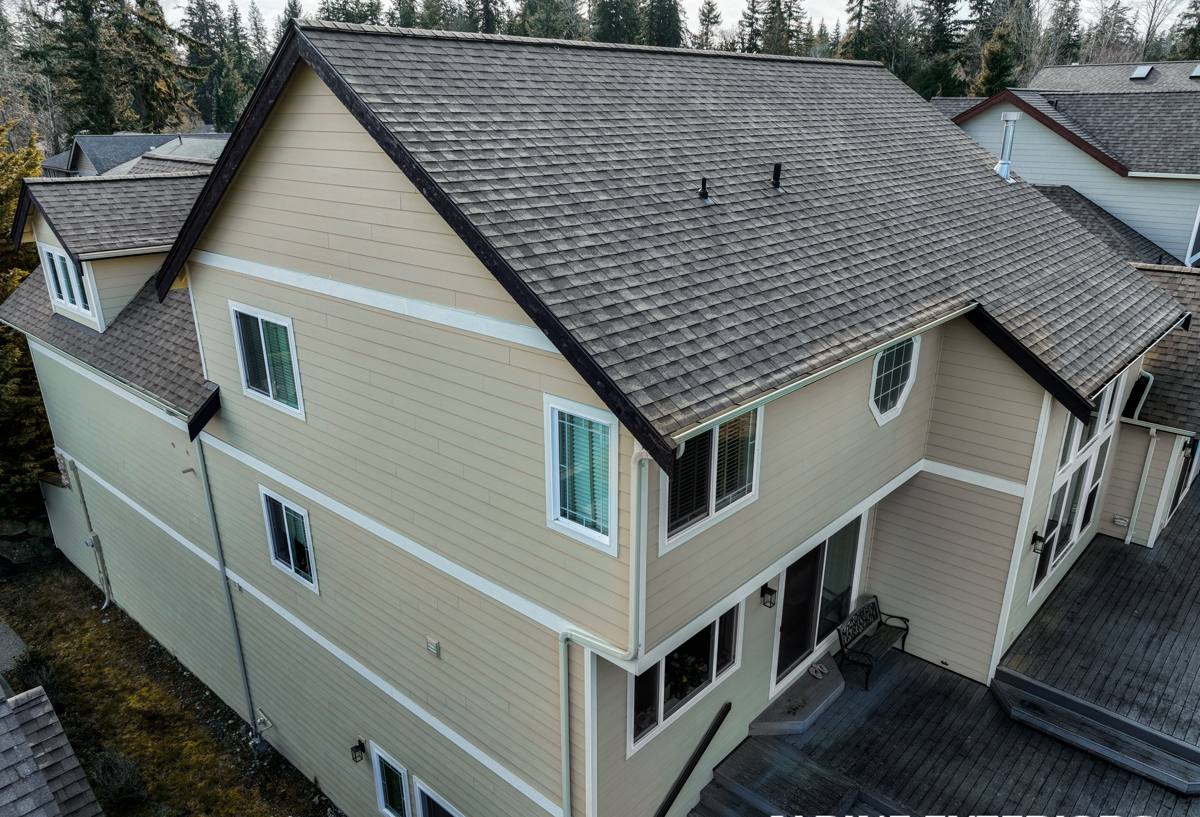
Fairhaven sits close enough to Bellingham Bay that salt-laden air is a daily fact of life, not an occasional nuisance. Combine that with Whatcom County's long wet season and the shade cast by mature evergreens on many older lots, and you get a deck environment that's genuinely harder on materials than most inland neighborhoods. A deck built without that in mind will look fine for a year or two and then start showing problems: soft spots, corroding fasteners, green film on every horizontal surface by December. A deck built for it holds up for decades.
We build and replace decks for homes throughout Ferndale and the surrounding Whatcom County area, including Fairhaven, and we've seen firsthand which construction choices actually matter here versus which ones are just upsells. This page covers what a correct deck build looks like for this specific setting.
What Salt Air, Rain, and Moss Actually Do to a Deck
Salt air and corrosion
Airborne salt accelerates corrosion on any exposed metal — nails, screws, joist hangers, structural connectors. On a deck close to the water, standard galvanized fasteners can start rusting years before they would inland. Once a fastener corrodes, it loses holding strength long before the rust is visible from the surface, which is part of why deck fastener choice matters more here than the marketing on a box of screws might suggest.
Driving rain and moisture intrusion
Rain that comes in sideways during a windstorm finds every gap in flashing, every unsealed ledger board connection, and every spot where decking meets a house wall. Over time that moisture works into framing lumber and, worse, into the rim joist and wall structure behind the ledger board — the single most common source of hidden rot on older decks in this region.
Moss, algae, and shade
Whatcom County's wet season runs long, and many Fairhaven lots have tree cover that keeps decking damp well after a storm has passed. Moss and algae aren't just cosmetic — a mossy deck surface holds moisture against the wood or composite longer, and it gets slick and genuinely dangerous underfoot, especially on stairs.
What a Correctly Built Deck Includes Here
A deck that's going to hold up in this climate isn't built differently in some exotic way — it's built with more attention to the details that matter, using materials matched to the exposure.
- Ledger board flashing that actually sheds water away from the house rim joist, not just a bead of sealant
- Stainless steel or heavy-duty coated fasteners and structural connectors rated for coastal/high-moisture exposure
- A gap and drainage plan for decking boards so water sheets off instead of pooling
- Joist tape or a comparable protective barrier on framing members to slow moisture absorption
- Post bases that keep wood posts off the ground and away from standing water
- Decking material chosen with the site's actual sun/shade exposure in mind, not a generic recommendation
- Stair and railing hardware sized and fastened for the traffic and weather the deck will see
Skipping any one of these doesn't usually cause an obvious problem in year one. It shows up in year five or six, as soft framing, rust streaks down the siding, or decking that's cupping and splitting.
Choosing the Right Decking Material for This Setting
There's no single "best" decking material — there's a best material for a given budget, sun exposure, and maintenance appetite. In a shaded, damp, salt-air setting like Fairhaven, some trade-offs matter more than others.
| Material | How it handles this climate | Maintenance | Typical lifespan |
|---|---|---|---|
| Pressure-treated lumber | Affordable, but absorbs moisture readily; needs consistent sealing to resist moss and rot in shaded areas | Annual cleaning and periodic sealing | 10-15 years with upkeep |
| Cedar | Naturally rot- and insect-resistant, ages to a natural gray; still needs sealing to fight moss in wet shade | Sealing every 1-3 years | 15-20 years with upkeep |
| Composite decking | Doesn't absorb water or rot; some early composite products struggled with mold in shaded, damp spots — modern capped composites handle it much better | Periodic washing, no sealing | 25-30+ years |
| PVC decking | Fully moisture-proof, very resistant to moss and algae staining; higher upfront cost | Occasional washing | 30+ years |
We don't push one material on every job. A sunny, open deck on a Fairhaven lot with good exposure can do very well in cedar with a homeowner willing to maintain it. A deck tucked under fir and cedar trees with little direct sun is usually a better candidate for composite or PVC, simply because it will spend more of the year damp and shaded than it will dry.
Framing and Structure: Where Problems Actually Start
Most deck failures aren't decking problems — they're framing problems that eventually reach the surface. The framing is also the part a homeowner can't easily inspect themselves once the decking is down, which is exactly why it needs to be done right the first time.
Ledger board attachment
This is the connection between the deck and the house, and it carries real structural load. It needs proper flashing, correct fastener spacing, and a clear drainage path so water doesn't sit against the house band joist. This single detail is behind a large share of the rot and deck-collapse issues seen in older homes region-wide.
Joist spacing and span
Joist spacing has to match the decking material and the expected load — composite and PVC boards often call for tighter joist spacing than solid wood to avoid flexing or long-term sagging. Undersized framing is invisible until the deck starts to feel bouncy or the boards start to cup.
Footings and posts
Whatcom County's wet soil conditions make footing depth and post-base detailing important for long-term stability. Posts set directly in soil or concrete without a proper standoff base will wick moisture and rot from the bottom up, often well before the rest of the structure shows any wear.
Permits and Local Requirements
Most new decks and many deck replacements in Whatcom County require a building permit, particularly when the deck is attached to the house, elevated above a certain height, or involves structural changes like new footings. Permit requirements and inspection steps can vary depending on the specifics of the project and the jurisdiction. We handle the permit process and coordinate inspections as part of the job, so homeowners aren't left navigating that on their own.
Our Process for a Fairhaven Deck Project
- On-site assessment. We look at sun/shade exposure, existing structure (if it's a replacement), drainage patterns, and how the deck will actually be used.
- Design and material selection. We walk through material trade-offs based on your specific site conditions and budget, not a one-size-fits-all recommendation.
- Permitting. We prepare and submit what's needed for your project and schedule required inspections.
- Demolition (if replacing). Old decking and, when needed, framing is removed and hauled off; we inspect the ledger and structure underneath before rebuilding.
- Framing and structural work. Footings, posts, joists, and ledger attachment are built to hold up under this region's moisture load, with corrosion-resistant hardware throughout.
- Decking, railing, and stairs. Installed with proper spacing and fastening for the chosen material.
- Final walkthrough. We go over care and maintenance specific to the material you chose, especially around moss prevention.
Maintenance That Actually Matters in This Climate
Whatever material a Fairhaven deck ends up with, a short list of maintenance habits makes the biggest difference in how long it lasts:
- Sweep leaves and needles off the deck surface regularly in fall — trapped organic debris holds moisture and feeds moss
- Wash the deck surface at least once a year to remove algae and moss film before it gets established
- Check and clear drainage gaps between boards so water isn't pooling
- Inspect railings and stair connections annually for loosening or corrosion
- Reseal wood decking (cedar or pressure-treated) on the schedule the material actually needs, not just when it looks dry
- Watch for soft spots near the ledger board connection, which can signal moisture getting behind the flashing
Why Local Deck-Building Experience Matters
A deck contractor who mostly works drier, inland jurisdictions can still build a structurally sound deck — but they may not default to the flashing details, fastener grade, or material picks that matter most a few blocks from Bellingham Bay. Crews who work Fairhaven and the rest of Whatcom County regularly have already seen which shortcuts fail here and which upgrades are worth the cost, because they've gone back and diagnosed the failures on other people's decks. That experience shows up in the parts of the build you won't see once the decking is down — which, for a deck, is most of what actually determines how long it lasts.
If you're planning a new deck or need to replace one that's showing its age, we're happy to take a look and talk through what makes sense for your specific lot and budget. Reach out for a free, no-pressure estimate using the form below.