 Ferndale Roofing
 Building Decks for Marietta's Waterfront-Adjacent Climate
Marietta sits close enough to the water that its decks take a different kind of beating than a deck built further inland in Whatcom County. Salt-tinged air off the bay, wind-driven rain, and long stretches of gray, damp weather all work on wood, fasteners, and finishes in ways that show up as problems years before they should. A deck built here needs to be planned with that environment in mind from the footings up, not treated as a generic backyard project with a view.
We build and repair decks throughout Ferndale, and Marietta jobs get their own set of decisions on material, hardware, and drainage because of what the site throws at the structure. This page walks through what actually matters for a deck in this specific area — not a general "how to build a deck" overview.
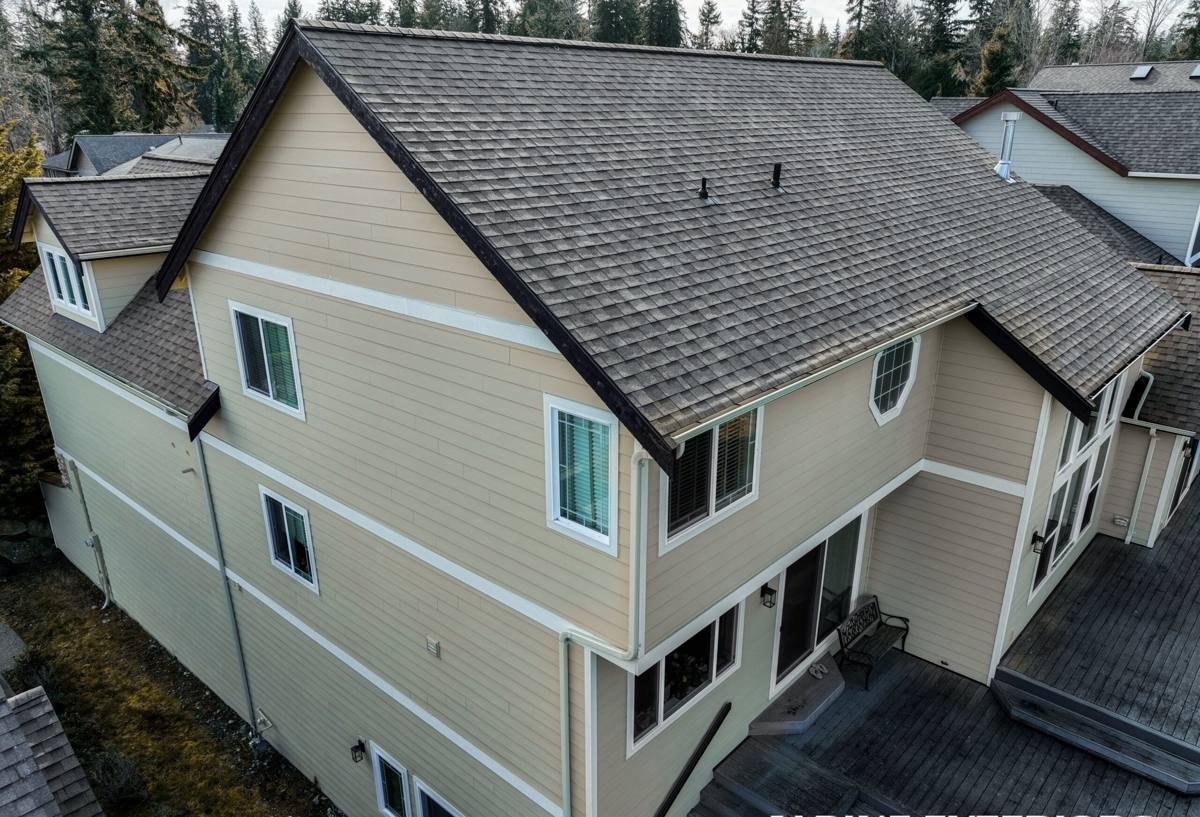
What Marietta's Location Actually Demands From a Deck
Three things drive most of our material and construction decisions on a Marietta deck:
Salt Air
Airborne salt accelerates corrosion on anything metal — fasteners, joist hangers, railing hardware, screws. Standard coated fasteners that hold up fine ten miles inland can start showing rust streaks and weakening within a few seasons this close to the water. That corrosion doesn't just look bad; a corroded fastener is a structural fastener that's losing holding strength.
Driving Rain
Rain here rarely falls straight down. Wind off the water pushes it sideways into ledger boards, fascia, stair stringers, and any horizontal surface that isn't properly flashed or sloped. Water that would just run off a well-drained deck elsewhere can get driven up under boards and into joints on a Marietta lot.
A Long Moss and Mildew Season
Whatcom County's wet season runs long, and shaded, moisture-holding surfaces here grow moss and algae for months at a time. On a deck, that means slick, degraded boards and hardware that stays damp far longer than it does in drier climates — which speeds up rot in wood and corrosion in metal alike.
None of this means a deck can't hold up well in Marietta. It means the build has to account for these conditions on purpose, rather than using whatever spec sheet a material happens to ship with.
Getting the Structure Right: Footings, Framing, and Ledgers
The part of a deck nobody sees is the part that determines whether it's still solid in fifteen years. In this climate, we pay particular attention to:
- Footing depth and placement suited to local soil and frost conditions, not just code minimums
- Ledger board attachment and flashing where the deck meets the house — this is the single most common failure point on decks near the water, since a poorly flashed ledger lets driven rain into the house framing itself
- Joist spacing tightened up where boards or fasteners are more moisture-sensitive
- Corrosion-resistant hardware throughout — hangers, screws, and structural connectors rated for coastal or high-moisture exposure, not standard interior-grade fasteners
- Proper slope away from the house on the decking surface so water sheds instead of pooling
A deck can look finished and still be quietly failing underneath if these details were skipped. We build the structure to outlast the surface material, since replacing decking boards later is a much smaller job than rebuilding a rotted frame.
Choosing Decking Material for This Climate
There's no single "best" decking material — there's a best fit for a given budget, look, and maintenance appetite, weighed against what salt air and long wet seasons will do to it over time. Here's how the common options compare for a Marietta job:
| Material | How It Holds Up Here | Maintenance | Typical Trade-Off |
|---|---|---|---|
| Pressure-treated wood | Solid if properly sealed and re-sealed; moss and mildew show up faster in shaded areas | Annual cleaning and periodic re-staining/sealing | Lowest upfront cost, highest ongoing upkeep |
| Cedar | Naturally rot-resistant, ages to a gray patina, but still needs sealing to fight moisture and moss in this climate | Regular cleaning, occasional oiling/sealing | Better natural look and rot resistance than treated wood, at a higher price |
| Composite decking | Resists rot and doesn't need sealing; some early composite products struggled with mold in shaded, damp spots — modern capped composites handle this far better | Periodic washing to keep surface algae/mildew from taking hold | Higher upfront cost, much lower long-term maintenance |
| PVC decking | Fully synthetic, doesn't absorb moisture, very resistant to mildew and moss staining | Occasional washing | Highest upfront cost, least maintenance, distinct feel underfoot vs. wood |
For a shaded or damp Marietta lot, we're generally more cautious recommending untreated wood species or budget composites that don't have solid moisture and mold performance — not because any one product is bad, but because the site conditions here punish materials that aren't built for sustained dampness. We'll walk through the real trade-offs for your specific lot rather than pushing one material across the board.
Fasteners and Hardware Matter as Much as the Boards
A beautiful composite deck held together with standard fasteners will still show rust bleed and weakened connections near the water within a few years. We spec stainless steel or coated corrosion-resistant fasteners and connectors on Marietta jobs as a standard, not an upgrade — it's the difference between hardware that's still sound at year fifteen and hardware that's already failing at year five.
Railings, Stairs, and Surface Details
Railings and stair components see the most direct weather exposure on a deck, since they're vertical, exposed on all sides, and often the first thing to show wear. Wood railings need the same sealing discipline as decking; metal railing systems need genuinely corrosion-resistant coatings, not just paint. On stairs, we pay close attention to stringer protection and drainage at the base, since standing water at ground level is where rot starts fastest.
Surface details like proper board spacing also matter more here than in a drier climate — gaps that are too tight trap moisture and debris, feeding moss growth, while gaps that are too wide can be uncomfortable and catch debris of their own. We set spacing based on the specific material's expansion behavior and this area's rainfall pattern.
Our Process, Start to Finish
- On-site assessment — we look at sun exposure, drainage, proximity to the house, and how exposed the site is to wind-driven rain before recommending anything.
- Design and material selection — we go over realistic trade-offs for your budget and how much upkeep you actually want to do.
- Permitting — we handle the permit process for the jurisdiction the property falls under, so the deck is built to code and properly inspected.
- Framing and structural work — footings, ledger flashing, joists, and hardware, built to hold up to this specific climate.
- Decking, railing, and stairs — installed to the spacing, fastening, and drainage details that matter here.
- Final walkthrough — we go over the finished deck and basic maintenance expectations with you before we consider the job done.
Permits and Local Code Considerations
Deck projects in and around Ferndale generally require a building permit once they exceed certain size or height thresholds, and inspections check structural elements like footings and ledger attachment before decking goes on. Requirements can vary depending on the specific jurisdiction your Marietta property falls under, so we confirm what applies to your lot before design work locks in, rather than assuming. Skipping permitting on a deck attached to your house isn't worth the risk — it affects insurance, resale, and whether the structure was actually inspected for the ledger connection that keeps it attached to the house.
Keeping a Marietta Deck Sound Long-Term
Even a well-built deck needs some ongoing attention in this climate. A simple seasonal routine goes a long way:
- Sweep off leaves and debris regularly, especially in shaded corners where moss gets a foothold fastest
- Wash the surface at least once a year to knock back algae and mildew before it stains or gets slick
- Check railing and stair hardware periodically for early rust or loosening, especially anything close to ground level
- Re-seal or re-stain wood decking on the schedule the product actually needs — don't stretch it because it "still looks fine"
- Keep an eye on the ledger board area where the deck meets the house for any signs of water intrusion
- Clear gutters and downspouts near the deck so roof runoff isn't adding to what the deck already has to shed
None of this is complicated, but skipping it in a climate with this much sustained moisture is how a well-built deck ends up needing early repairs.
Why a Crew That Already Works Marietta Matters
A deck built to a generic spec sheet, without accounting for salt air, driving rain, and a long moss season, tends to show its weaknesses early — corroded fasteners, moss-slicked boards, or a slowly rotting ledger connection. We work in Ferndale and Whatcom County regularly enough to know which materials and hardware actually hold up in this specific environment versus which ones just perform well in a showroom or a drier region. That's the difference between a deck that needs real attention in five years and one that's still sound in twenty.
If you're planning a new deck or need an honest look at repairing one in Marietta, we're happy to come take a look. There's no pressure and no cost for a straightforward estimate — just fill out the form below and we'll go from there.