 Ferndale Roofing
 Lummi Island's Climate Puts Board & Batten Siding to the Test
Board and batten is one of the most requested siding looks on Lummi Island, and for good reason — the vertical lines and crisp shadow pattern suit the island's mix of modest cottages, newer builds, and everything in between. But the look is only half the story. Lummi Island sits out in the water, which means homes here take a steadier beating from salt-laden air, wind-driven rain coming off the Sound, and a moss and algae season that runs long into a typical Whatcom County year. Any siding installed here has to handle all three at once, and board and batten in particular lives or dies by how well the vertical joints and battens are detailed against moisture.
We're a Ferndale-based crew, so we already know this stretch of coastline before we ever step onto a job site. That matters more than it sounds — a lot of siding failures on the island trace back to installers who treated it like any other job and didn't account for how much water and salt exposure this location actually sees.
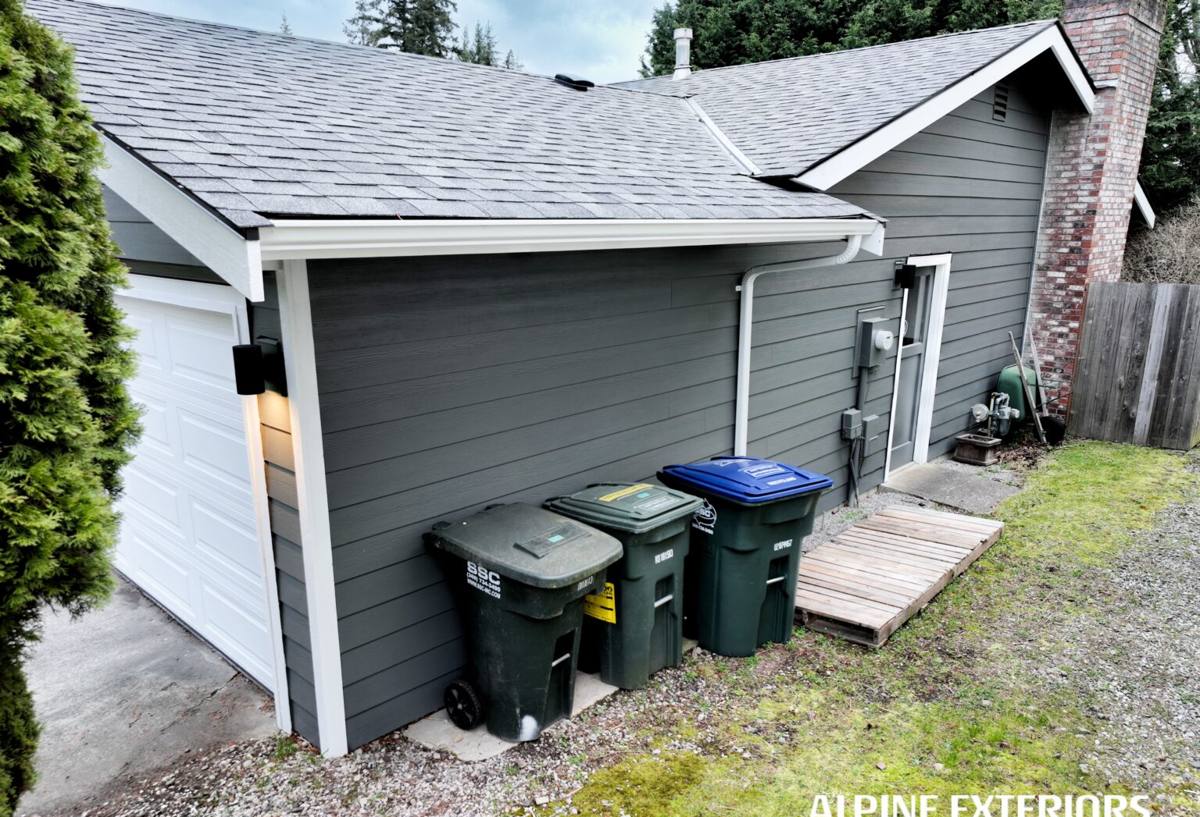
What Board & Batten Siding Actually Is
Board and batten is a vertical siding pattern: wide boards (or panels) run up the wall with narrower strips — the battens — covering the seams between them. It's one of the oldest siding styles in American building, originally developed as a practical way to cover gaps in vertical wood planks, and it's stuck around because the look works on nearly every home style, from farmhouse to modern.
On the material side, there are a few ways to build a board and batten wall:
- True board and batten — individual vertical boards with separate battens fastened over the seams
- Panelized systems — large vertical panels (like James Hardie's HardiePanel) with battens applied over the joints to create the same look with fewer seams overall
- Reveal-style vertical siding — a related look using a shadow gap instead of a raised batten, sometimes mixed into board and batten designs for variation
The pattern itself isn't the risk — the material behind it is. Every vertical joint and batten fastening point is a place water can find its way in if the wrong product or the wrong installer is behind it.
Why We Only Install James Hardie Board & Batten
We don't install LP SmartSide, vinyl, Cemplank, Allura, primed spruce, or raw cedar board and batten. That's a deliberate standard, not a lack of options. Wood board and batten looks great fresh out of the gate, but it needs regular refinishing, and on an island with this much salt air and moss pressure, that maintenance window shrinks fast. Vinyl board and batten is affordable and low-maintenance, but it's a thinner product that can warp in heat, crack in cold, and it simply doesn't hold up visually the way a factory-finished fiber cement board does over a couple of decades. Engineered wood products bring their own moisture sensitivity at cut edges and seams, which is exactly where board and batten has the most seams to worry about.
James Hardie fiber cement is non-combustible, dimensionally stable in wet-dry cycling, and comes with a factory-applied ColorPlus finish that's baked on rather than field-painted, which matters enormously in a batten-heavy pattern where you're relying on consistent color and sealed edges at dozens of vertical joints. Hardie's HZ5 product line in particular is engineered for wetter, harsher climates like the Pacific Northwest coast — it's the version of their product built for exactly the kind of exposure Lummi Island homes deal with. We stand behind it because we've seen how it performs here, not because of a sales pitch.
What a Correct Board & Batten Installation Involves
The board and batten look is simple. Installing it correctly so it survives a Whatcom County coastal winter is not. The details that actually determine whether a board and batten wall lasts:
Rainscreen and drainage plane
A furring strip or drainage wrap behind the siding lets any moisture that gets past the surface drain and dry out instead of sitting against the wall sheathing. On a house exposed to driving rain off the water, this is not optional — it's the difference between siding that dries out after a storm and one that slowly rots the sheathing behind it.
Flashing at every horizontal transition
Window heads, door heads, roof-to-wall intersections, and any point where a horizontal surface meets vertical board and batten siding needs proper flashing, not just caulk. Caulk fails; flashing sheds water by design.
Fastening pattern
Battens and boards need to be fastened per the manufacturer's engineering, into solid framing, with the right fastener spacing and edge distance. Over-driven or under-driven nails are one of the most common causes of premature siding failure we see when we're called out to look at other contractors' work.
Joint and seam sealing
Where boards or panels butt together, factory-finished edges and correctly sealed joints keep water from wicking in behind the batten. This is the single most failure-prone detail in any board and batten installation, and it's where cutting corners shows up first — usually a couple of years too late for an easy fix.
How Board & Batten Materials Actually Compare
| Factor | James Hardie Fiber Cement | Vinyl | Wood / Engineered Wood |
|---|---|---|---|
| Salt air resistance | Strong — non-organic, factory-sealed finish | Fair — can chalk and fade faster near water | Weak — absorbs moisture and salt over time |
| Moss and moisture exposure | Strong — doesn't feed organic growth or rot | Moderate — moss grows on surface but material doesn't rot | Weak — moss retains moisture against the wood |
| Refinishing needed | Rare — ColorPlus finish is warrantied for years | None, but color options are limited and can't be changed | Frequent — repaint or reseal every few years |
| Fire resistance | Non-combustible | Combustible | Combustible |
| Typical lifespan (PNW coastal) | 30+ years installed to spec | 15–25 years | 10–20 years before major refinishing/replacement |
Cost follows a similar pattern: vinyl is usually the cheapest upfront, wood sits in the middle depending on species and finish, and Hardie carries a higher material cost than vinyl but a lower total cost of ownership once you factor out a decade or two of repainting or premature replacement.
Our Process for Lummi Island Jobs
Working the island means planning around the ferry schedule and limited daily crossings, so we batch material deliveries and crew time to avoid wasted trips — that's part of why hiring a crew that already works Lummi Island regularly is worth something. A one-off contractor unfamiliar with the logistics either pads the bid to cover the uncertainty or cuts corners on scheduling to save time. We do neither, because we've already worked out the rhythm.
On site, our process is straightforward:
- Walk the exterior and assess existing siding, trim, and moisture damage before quoting
- Confirm the board and batten layout and reveal spacing with the homeowner before ordering material
- Remove old siding and inspect sheathing for hidden rot or moisture damage before closing the wall back up
- Install drainage plane, flashing, and Hardie board and batten per manufacturer specification
- Final walkthrough with the homeowner to review the finished work and warranty paperwork
Maintenance Checklist for Salt-Air, Moss-Prone Homes
Even with a durable material, a little seasonal attention keeps board and batten siding looking sharp on an island property:
- Rinse salt residue off siding surfaces once or twice a year, especially on sides facing open water
- Keep gutters clear so overflow doesn't run down and pool behind battens
- Trim back vegetation and tree cover that keeps siding shaded and damp longer than it needs to be
- Check caulking at window and door trim annually — this is the first place a seal typically gives out
- Look for moss or algae buildup at the base of the wall and low-light areas, and clean it before it spreads
- Have any impact damage (branches, debris in wind events) inspected promptly rather than left through a wet season
When to Repair vs When to Replace
Not every issue means a full re-side. Isolated impact damage, a failed section of caulking, or a few damaged boards can often be repaired or replaced in place if the underlying wall is dry and sound. The signs that point toward full replacement instead are soft or spongy spots when you press on the siding, visible gaps or separation at battens, paint or finish failure across large areas, or moisture damage showing up on interior walls near exterior siding. On a coastal property, catching these early is worth more than on a sheltered inland lot, because moisture problems here tend to move faster once they start.
If you're weighing a board and batten project on Lummi Island — whether it's a full replacement or you just want an honest opinion on what your current siding needs — we're happy to come take a look. The estimate is free, there's no pressure, and you'll get a straight answer about what your home actually needs.